

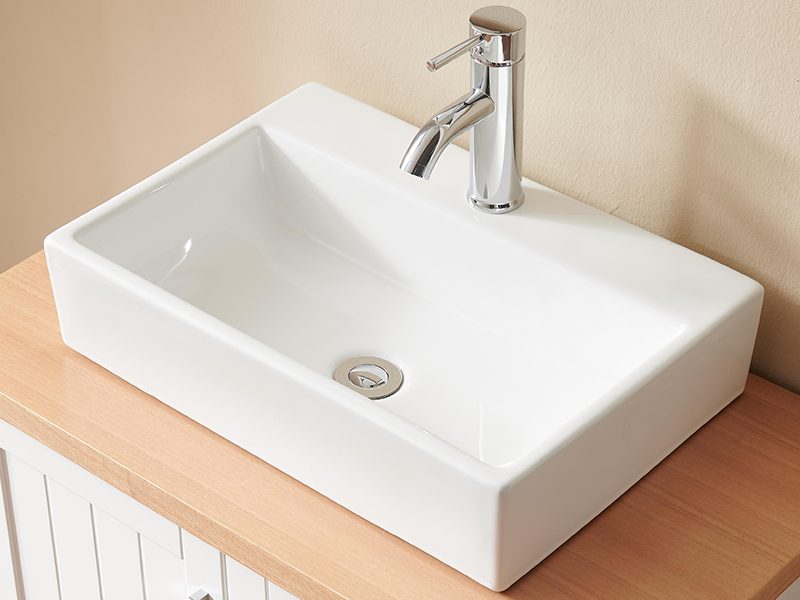
If an above counter basin turns yellow or gets covered in dark micro-scratches six months after installation, don’t blame the housekeeping crew. The damage was done in the kiln long before the shipment left the factory port.
In high-traffic commercial projects, dealing with yellowing Bathroom Sinks usually means high replacement costs and client disputes. The bad news? Standard factory specification sheets often hide the defects that cause these failures.
As a ceramic bathroom basin factory, we deal with glaze formulation and firing physics every day. Here is the straightforward reality of why ceramic basins fail, and four quick tests B2B buyers can perform on the factory floor before releasing production payments.
1. Why Sinks Turn Yellow & Get Scratched (The Hard Truth)
Buyers often ask: “Is the glaze reacting with chlorine or acidic toilet cleaners?”
Short answer: No. Inorganic glaze doesn’t degrade or turn yellow on its own. Yellowing and permanent dirty scuffs stem from two specific manufacturing shortcuts:
- Porosity Below the Glaze (Internal Yellowing): Low-tier factories save on natural gas by firing basins at 1000°C–1100°C. The clay body remains spongy. Wastewater, soap scum, and minerals slowly seep through microscopic glaze pores into the ceramic core. The sink turns yellow from the inside out, and no surface cleaner will ever fix it.
- Soft Glaze Formulations (Trapped Scuffs): Budget glazes lack density and scratch easily under everyday use or routine scrubbing. Metal particles and dirt get locked inside these fine surface gouges, leaving dark gray streaks that look like permanent dirt.
2. 1280°C Firing: The Non-Negotiable Density Standard
Building a truly durable bathroom vessel sink comes down to complete vitrification:
- Low-Temp Firing (1000°C – 1100°C): High Porosity (>0.5%) ➔ Liquid Penetration ➔ Internal Yellowing & Foul Odors
- High-Temp Firing (1280°C): Fully Vitrified Matrix (<0.2%) ➔ Zero Liquid Absorption ➔ Permanent Surface Clarity
When negotiating with any sanitary ware OEM, demand third-party proof of a water absorption rate for ceramic below 0.2%.
At 1280°C high temperature firing, quartz and feldspar fully melt, forming a solid, non-porous crystal structure.
Rule of Thumb: A basin with <0.2% water absorption physically cannot absorb moisture or sewage. It stays white because dirty water simply cannot get inside the clay body.
3. Surface Tech: Micro-Crystalline Nano Glaze vs. Cheap Standard Glaze
The glaze layer takes all the surface abuse. Knowing what separates standard glaze from commercial-grade finishing is vital when picking an above counter basin supplier.
| Glaze Profile | Surface Micro-Structure | Stain Behavior | Real-World Maintenance |
| Standard Glaze | Rough surface full of microscopic pinholes and valleys. | Grime and hard water stick easily. | Needs aggressive acid scrubbers; scratches quickly. |
| Micro-Crystalline Nano Glaze | Triple-sprayed, dense, mirror-smooth finish. | Hydrophobic (repels water droplets and oil). | Easy clean basin glaze; wipes down with plain water. |
For an authentic anti-stain bathroom sink, we apply a 1.1mm to 1.3mm micro-crystalline nano-glaze layer before firing. The 1280°C burn melts it into an ultra-hard glass coating—creating a genuine scratch resistant glaze built for hotel and commercial use.
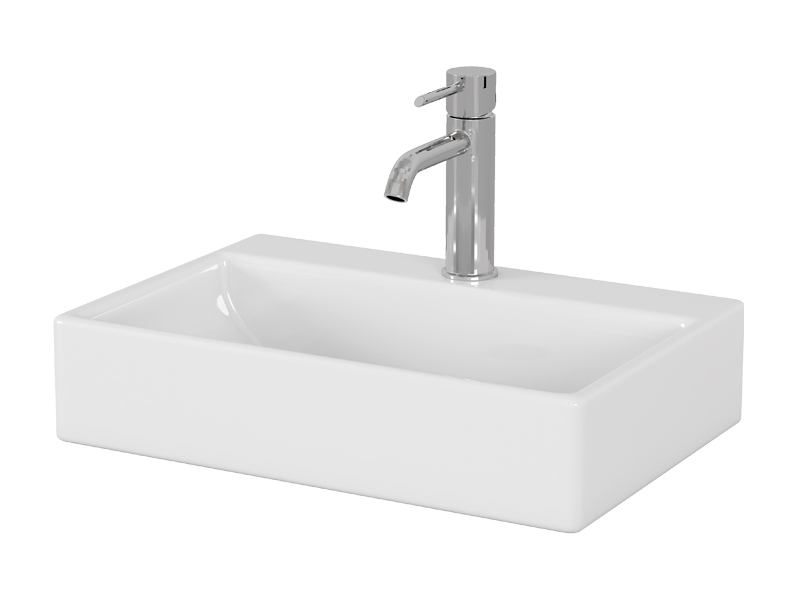
4. 4 Field Tests You Can Run on the Factory Floor
You don’t need an advanced lab to test basin quality. Run these four fast checks on your next sample batch:
Step 1: The Permanent Marker Test
- Draw a dark 2-inch block on the basin bowl using a black oil-based marker.
- Leave it dry for 15 minutes.
- Wipe it with a dry paper towel—no water, no soap.
- Pass Criteria: A proper high-temperature fired ceramic basin wipes clean instantly with zero stain halo.
Step 2: The Key & Coin Scratch Test
- Take a house key or coin edge and firmly drag it across a flat area of the basin.
- Pass Criteria: Soft glazes will trap metal residue and leave dark, unremovable streaks. A hard scratch resistant glaze won’t scratch; any gray line left behind is just loose metal powder that rubs off effortlessly with a wet finger.
Step 3: The Acoustic Knock Test
- Tap the basin rim with a metal key ring or small wooden block.
- Pass Criteria: A clear, high-pitched metallic ring means high density and complete vitrification. A dull, hollow thud signals a low-firing temperature, soft interior clay, or hidden internal cracks.
Step 4: The 15° Angle Light Inspection
- Hold a bright flashlight low to the surface at a 15° oblique angle.
- Pass Criteria: Check for tiny pinholes, ripple marks, or “orange peel” textures. High-grade finishes show a flat, crisp light reflection across the entire deck.
5. Specs Side-by-Side: Budget vs. Commercial-Grade Basin
| Performance Feature | Low-Temp Standard Vessel Sink | High-Temp Nano-Glaze Basin (Engineering Grade) |
| Firing Temperature | 1000°C – 1100°C (Semi-vitrified) | 1280°C (Fully Vitrified) |
| Water Absorption Rate | > 0.5% (High risk of internal discoloration) | < 0.2% (Stain-proof & odor-proof) |
| Anti-Yellowing Life | Begins yellowing in 12–18 months | 10+ years without shade shift |
| Daily Cleaning | Requires strong chemical detergent | Simple wipe with a wet cloth |
| Scratch Resistance | Scratches easily from metal rings/brushes | High Mohs surface hardness |
| Claim Risk | High (Likely client complaints down the line) | Minimal (Built for high-traffic commercial use) |
6. Real-World Buyer FAQs
Q1: Can hard water cause permanent yellowing on ceramic sinks?
Answer: Hard water leaves temporary mineral scale, which washes off easily with mild vinegar. But if yellow stains won’t budge after washing, or if the yellow hue sits under the smooth surface, the sink body has >0.5% water absorption. It absorbed dirty water underneath the glaze—that is a material defect, not a water issue.
Q2: How do you remove scratches on a ceramic sink after installation?
Answer: Contractors frequently ask how to remove scratch on ceramic sink surfaces. If the mark is just metal deposit rubbed off on a hard glaze, buffing it with ceramic polishing paste will fix it. But if cheap glaze was gouged open by a sharp tool, the glaze surface is broken. It can’t be washed off; the unit needs recoating or replacing.
Q3: Why is bottom flatness so important for volume orders?
Answer: Warped basin bottoms (anything over 2mm out of flat) won’t sit flush on stone counter cutouts. Installers have to slap on thick layers of silicone to stop wobbling. Over time, that silicone turns black, grows mold, and leaks. We hold bottom tolerance to <1.5mm so your installation teams can drop and seal basins fast.
Factory Direct OEM / Project Supply
Tired of dealing with quality surprises after shipping whole containers? We manufacture 1280°C high-fired ceramic basins engineered for real commercial durability—no shortcuts on gas, clay, or glaze.
Need physical samples for your next project, custom OEM specs, or direct factory pricing? Drop us a message with your specs, and we’ll send out sample kits and lab test sheets right away.