

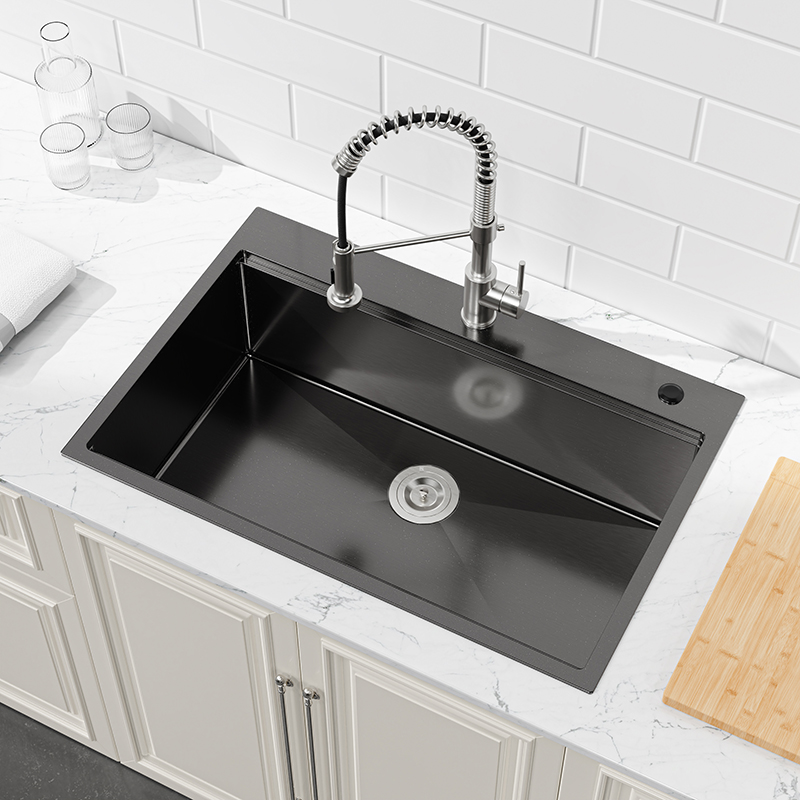
Is your inbox full of customer complaints about dripping cabinets or loud water noise? As a sink distributor or OEM brand, 80% of your post-purchase headache boils down to two overlooked details: metal resonance noise and under-sink condensation moisture. These minor structural flaws are the leading causes of product returns, warranty claims, and damaged brand reputation in the kitchen and bath industry. Properly deploying professional kitchen sink noise reduction and moisture-proof solutions can cut your RMA and after-sales costs by 35%-50% effectively. Based on Topcraft’s years of mass production and OEM customization experience, this guide deeply compares two mainstream under-sink treatments—sound dampening rubber pads and anti-condensation undercoating—to help B2B buyers balance quality, cost control, and market competitiveness.
The Hidden Cost of Budget Sinks: How Noise & Sweating Damage Your Profit
Most low-cost sinks cut corners on bottom insulation and soundproofing craftsmanship to save production costs, triggering continuous after-sales issues after bulk shipment. Thin 201 and 304 stainless steel sheets create obvious resonant noise when impacted by running water or tableware friction, forming the harsh dripping sound that end-users complain about frequently. More importantly, severe undermount sink condensation occurs due to indoor and outdoor temperature differences. Accumulated water droplets continuously soak cabinet panels, causing mold growth, wood swelling, and deformation. Most customers misjudge the issue as sink leakage, resulting in unnecessary warranty claims and product returns.
Many sourcing teams only focus on sink appearance and steel thickness while ignoring under-sink craftsmanship. In fact, these hidden details determine your long-term RMA rate, customer repurchase rate, and brand credibility, becoming the key distinction between low-end generic products and high-quality wholesale sinks.
Feature Breakdown: Sound Dampening Pads vs. Anti-Condensation Undercoating
Two technical solutions dominate the industry for solving sink noise and cabinet moisture issues: EPDM sound dampening pads and anti-condensation thermal undercoating. Each serves an independent core function and cannot fully eliminate after-sales pain points when used alone. The detailed comparison below clarifies their performance differences, applicable scenarios, and mass production advantages for B2B sourcing.
| Comparison Item | EPDM Eco-Friendly Sound Dampening Pads | Anti-Condensation Thermal Undercoating |
|---|---|---|
| Core Function | Absorb water flow and tableware impact vibration to eliminate stainless steel sink resonance at the source | Build a thermal insulation barrier to block temperature differences, prevent sink sweating and cabinet moisture damage |
| Noise Reduction Performance | Reduce 50%-70% high-frequency metal clanging noise for superior user experience | Provides minor auxiliary shock absorption with negligible noise reduction effect |
| Moisture & Mold Resistance | No thermal or moisture-proof function; gaps easily trap water and breed mold | Forms a 1.0-1.5mm microporous thermal layer to permanently block condensed water droplets |
| Material Compliance | Topcraft adopts 100% odorless EPDM/NBR rubber with zero VOC emissions, meeting EU and US environmental standards; superior to low-grade asphalt pads with high-temperature odor volatility | Matte eco-coating with strong adhesion, no peeling, and zero harsh odor for all household scenarios |
| Mass Production Specs | 2.0-3.0mm standard thickness, 60%-80% coverage on sink base and side walls (industrial grade) | 1.0-1.5mm uniform spray thickness with full coverage and no blank spots |
| Service Lifespan | Resistant to warm water soaking, hardening and cracking for long-term stable shock absorption | No peeling or failure within 3-5 years of regular use for long-lasting protection |
| Best Application | Undermount stainless steel sinks, large single bowls, high-frequency commercial kitchen sinks | Thin-gauge stainless steel sinks, compact residential sinks, general household basins |
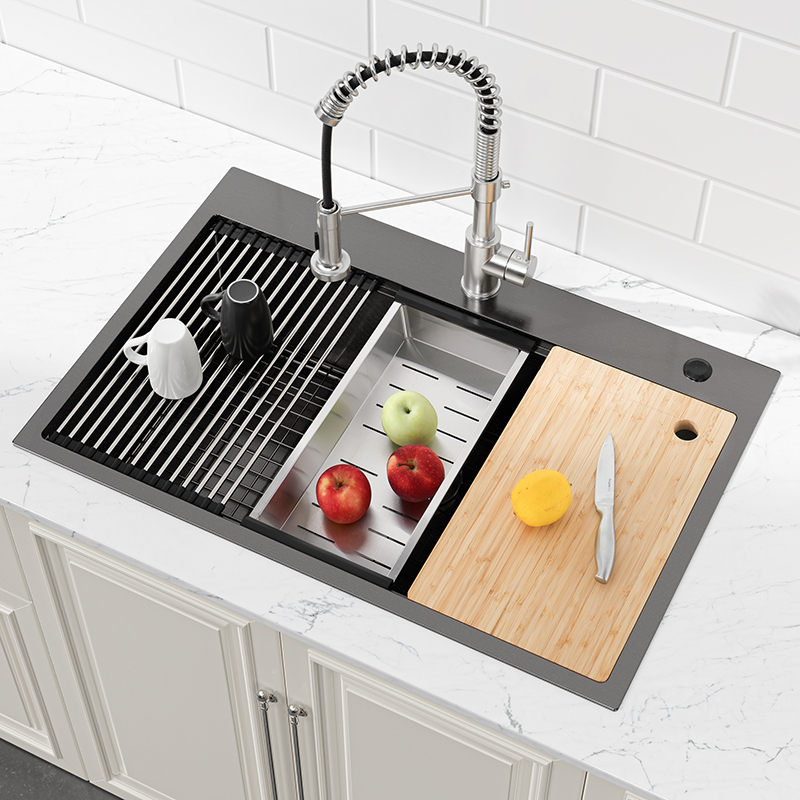
Combo Method: The Most Cost-Effective Solution to Lower RMA Rates
Verified by massive mass production cases, single craftsmanship can only solve a single problem and fails to meet high-end end-user demands. To minimize after-sales return costs and boost product premium value, the combined solution of full-coverage sound dampening pads plus complete anti-condensation undercoating is recognized as the optimal industry standard.
All Topcraft premium kitchen sinks adopt standardized dual craftsmanship for mass production, with strict implementation rules as follows:
- Equipped with 2.5mm thick eco-friendly EPDM sound dampening pads as standard, maintaining over 70% full coverage on sink base, side walls and drain base to eliminate metal resonance and water impact noise thoroughly
- Adopts full matte grey anti-condensation undercoating with no missing coverage, building a stable thermal barrier to avoid mold, deformation and false leakage complaints caused by sink sweating
- Completely abandons low-grade asphalt pads and cheap coatings, ensuring zero odor and zero harmful volatile substances to meet international environmental compliance standards for high-end decoration and engineering projects
Validated by tens of thousands of daily washing simulation tests, this dual-craft system stably reduces noise and condensation-related warranty claims by 35%-50%. It perfectly balances production cost and product durability, effectively upgrading your product competitiveness in the wholesale and OEM market.
B2B Buyer FAQ: Sourcing & Customization Guide
We have sorted out the most concerned questions from global bulk buyers and OEM partners, covering material compliance, personalized customization, cost control and after-sales performance.
Q1: What is the key difference between EPDM pads and traditional asphalt pads?
A: Asphalt pads have lower production costs but release pungent odors and harmful volatile substances under high temperature or hot water flushing, failing international VOC compliance tests and causing massive end-user complaints. Topcraft’s EPDM rubber pads are 100% odorless, temperature-resistant and aging-resistant, fully meeting EU and US environmental standards, making them the ideal choice for high-volume B2B sourcing.
Q2: Can we customize sound pad thickness and coverage for different OEM budget lines?
A: Full customization is available. We can adjust pad thickness from 2.0mm to 3.0mm and coverage rate from 60% to 80% according to your budget and product positioning, covering entry-level, mid-range and high-end stainless steel sink noise control demands to match your market layout.
Q3: Does anti-condensation undercoating add extra weight and affect container loading volume?
A: No. The 1.0-1.5mm ultra-thin coating brings negligible weight gain, does not change the original packaging specifications, and will not increase logistics costs or reduce container loading efficiency.
Q4: What is the warranty and maintenance requirement for the dual-craft sinks?
A: Zero daily maintenance is required. Topcraft’s dual-process sinks feature tightly bonded coatings and rubber pads, with stable performance for 3-5 years of regular use without peeling or failure, greatly reducing long-term after-sales maintenance pressure.
Reduce Your RMA Rate & Boost Product Premiums with Topcraft
If you are troubled by high return rates, cabinet moisture complaints and noisy sink feedback, Topcraft provides professional B2B solutions to upgrade your product quality. All our kitchen sinks and undermount basins support bulk procurement, OEM customization and free sample testing. We can provide complete craft manuals, performance parameter reports and tailored production solutions.
Request a free sample pack and OEM quotation today to test our 2.5mm EPDM sound dampening and anti-condensation coating performance, lower your after-sales costs, and build high-competitiveness kitchen sink products.