

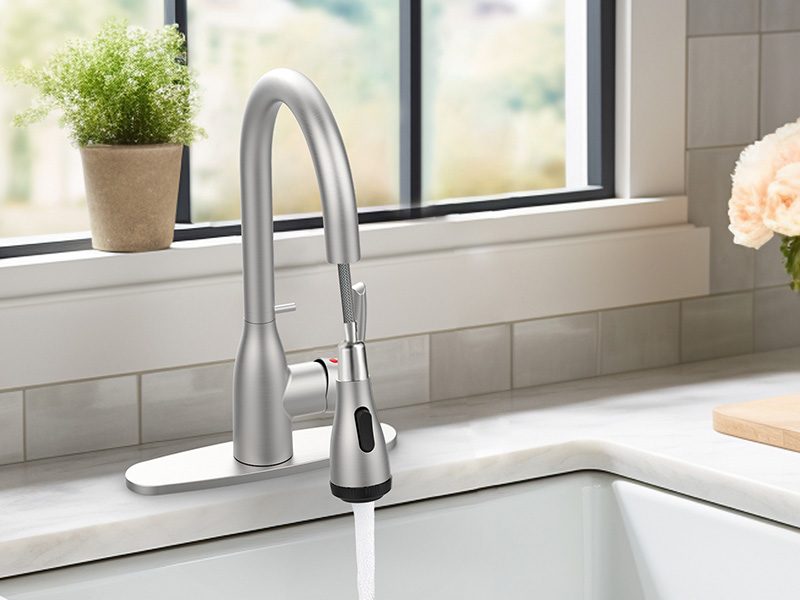
In the competitive B2B plumbing supply landscape, inventory carrying costs directly impact bottom-line profitability. Plumbing distributors, wholesalers, and brand owners often face severe inventory bloating caused by over-categorized replacement parts. Managing dozens of unique ceramic cartridges and thread-specific aerators across separate kitchen and bathroom product lines ties up working capital, consumes warehouse footprint, and complicates order fulfillment.
Standardizing core components—specifically valve cartridges and water aerators—across kitchen and bathroom faucet catalog lines is a high-leverage supply chain optimization strategy. By engineering cross-category compatibility, hardware importers and distributors can reduce spare parts inventory backlog by at least 20% while improving fulfillment accuracy and supplier lead times.
1. The B2B Inventory Dilemma: The Hidden Cost of Component Proliferation
Managing mismatched replacement parts creates friction at every node of the supply chain.
- Excessive Capital Immobilization: Carrying unique SKUs for every kitchen and basin faucet line locks up cash flow in low-turnover safety stock.
- High Picking & Packing Error Rates: Warehouse operators handling visually identical but dimensionally distinct cartridges (e.g., 35mm vs. 40mm stem variations) frequently mispick items, leading to costly returns and negative customer feedback.
- Minimum Order Quantity (MOQ) Friction: Sourcing small quantities of specialized cartridges or niche aerators from manufacturers forces buyers to accept higher unit costs or meet high MOQs that create long-term inventory overhang.
For a distributor managing 500+ faucet SKUs, maintaining distinct replacement parts for kitchen and bathroom collections generates a tail of low-turnover inventory that severely drag down inventory turnover ratios (ITR).
2. Core Drivers of Standardization: Cartridges & Aerators
By collaborating with OEM/ODM partners like Kitchen Bath Plumbing, distributors can align technical specifications across kitchen and bathroom product matrices without compromising design or functionality.
A. Universal Ceramic Disc Cartridges
The valve cartridge is the operational engine of any faucet. Standardizing around high-durability, industry-standard cartridge footprints—such as standard 35mm and 40mm ceramic disc cartridges with identical torque tolerances and flow profiles—allows a single cartridge SKU to service both high-arc kitchen mixers and single-handle bathroom faucets.
- Benefits: Reduces total cartridge SKU variants by up to 50% across both categories.
- Certifications: Standardized units can be pre-certified for global standards (cUPC, NSF/ANSI 61, CE, WRAS), eliminating re-certification delays per collection.
B. Standardized Aerators and Thread Pitch
Aerators regulate water flow rate, splash prevention, and acoustic performance. Implementing universal thread housing (e.g., standard M24x1 male or M22x1 female threads) with interchangeable internal flow cores allows standard aerator shells to fit both kitchen pull-out spouts and bathroom vessel faucets.
- Benefits: Facilitates quick customization for regional flow-rate mandates (e.g., CALGreen 1.2 GPM for California vs. standard 1.8/2.2 GPM) simply by changing the internal flow restrictor rather than the entire spout or housing assembly.
3. Financial Impact: Quantifying the 20% Inventory Backlog Reduction
Transitioning to standardized components yields tangible financial returns across logistics, procurement, and warehouse operations.
| Metric | Multi-SKU Legacy Model | Standardized Component Model | Operational Impact |
| Active Spare Part SKUs | High (80+ unique parts) | Streamlined (15–20 universal parts) | 75% reduction in spare part SKUs |
| Safety Stock Volume | High per individual SKU | Consolidated across product lines | 20%–25% reduction in stock volume |
| Procurement Unit Cost | Higher (fragmented order volumes) | Lower (bulk volume purchasing per SKU) | 8%–15% unit cost savings |
| Fulfillment Error Rate | 3.5%–5% mispicks | Under 0.5% | Lower reverse logistics expenses |
The Math Behind the 20% Inventory Reduction
By consolidating safety stock requirements across kitchen and bathroom categories (applying the Square Root Law of Inventory Consolidation), total required buffer stock drops significantly:
When consolidating 4 distinct niche cartridge SKUs into 1 universal standardized cartridge, the required overall safety stock level decreases by approximately 50% for that component family, easily driving a 20% overall reduction in warehouse spare parts inventory backlog.
4. Implementation Strategy for Importers and Hardware Brands
To successfully execute a standardization strategy across your supply chain, follow a phased rollout:
- Audit Your Current SKU Architecture: Group existing kitchen and bathroom faucet lines by flow rate requirements, body dimensions, and cartridge stem lengths. Identify overlapping specifications.
- Define Core Standard Platforms: Select 2–3 standard cartridge formats (e.g., 35mm cold-start ceramic cartridge) and 2 universal aerator thread formats that cover 90% of your product catalog.
- Partner with a Specialized B2B OEM Manufacturer: Collaborate with manufacturing partners who offer modular engineering. At Kitchen Bath Plumbing, we design kitchen and bathroom hardware series built on unified internal platforms, ensuring seamless parts compatibility and certified quality control across your entire catalog.
- Consolidate Warehouse Logistics: Re-label unified spare parts under single master SKUs in your ERP system to instantly streamline picking routes and stock auditing.
Optimize Your Plumbing Hardware Supply Chain
Standardizing valve cores and aerators isn’t just an engineering choice—it is a strategic financial lever for modern plumbing importers, wholesalers, and retail brands. By streamlining internal components across kitchen and bathroom lines, you unlock working capital, decrease warehouse overhead, and build a more resilient supply chain.
Looking to optimize your hardware product catalog and streamline your sourcing?
Explore high-performance, standardized kitchen and bathroom faucet platforms engineered for global B2B distributors at Kitchen Bath Plumbing. Contact our engineering and OEM teams today to review our modular hardware solutions.